The other day, a group of students went on a day trip to Nagi Gompa, a nunnery nestled in the Shivapuri Nagarjun National Park (usually a monastery is called Gonpa in Tibetan or Gumba in Nepali).
It was a wonderful day. We left Boudha around 8 am (I strongly recommend going early), and the journey to the monastery included a ~20min drive to the main gate of Shivapuri Nagarjun National Park. From there, as a foreign tourist, one generally needs to pay 1,000 NPR for a park ticket. Usually the ticket office will insist for you to hire also a guide, however, one can try to also insist that one does not need it. Ideally, to reduce any frustration, I would recommend going as a group of 3+ people, so if they really succeed with getting the guide, then you can split the cost. Also, don’t forget to bring your passport.
Within the national park, there are military buildings, so the military is responsible for the park. So one needs to be conscious of that. I have heard that it is possible to go by car, e.g. a taxi, all the way up to the monastery, but I have never done it, so I cannot say more than that. After you have obtained the ticket, a military personnel member will check what you have in your bag. After that, one is ready to go.
Then, from the checkpoint, one takes the stairs on the right and up. It takes around 1h to reach the monastery. The road is pretty straightforward. After one takes the right from the checkpoint/ticket office, one just walks and follows the road. There is, however, one point at which the signs say 25 minutes to Nagi Gumba, but one can ignore this and just keep walking up the road.
I have to warn you that there are monkeys around, so keep all food and shiny stuff closed in a non-transparent bag. If a monkey approaches, just give them whatever they want. And this is another reason to go in a group, I think. After one hour walking up, one will eventually reach the bottom of the monastery.
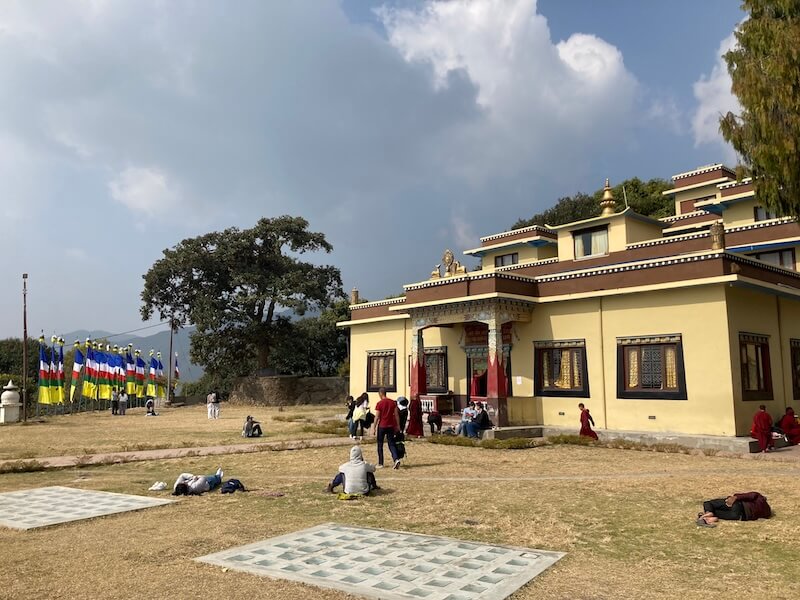
Once we reached the monastery, our philosophy teacher, Gerd, told us some stories about the history of Nagi Gompa, so what follows is from Gerd.
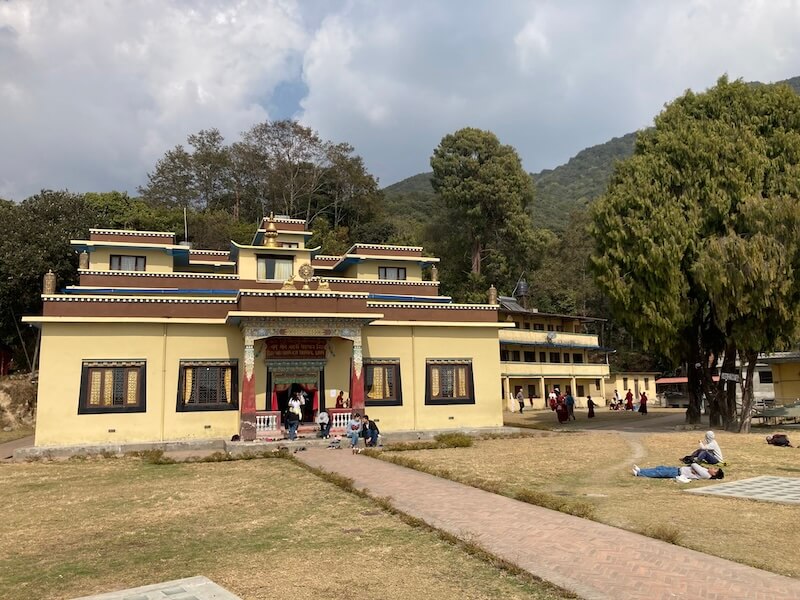
The monastery / nunnery was established in 1940 by an Indian yogi called Garsha Lama Sonam Tenzin. He was originally from the area that borders Ladakh. However, it is not completely clear why he decided to build a monastery in Kathmandu. He was a devoted practitioner and follower of Tibetan Buddhism, particularly the 16th Karmapa. Before he passed away, he donated the place to the 16th Karmapa. There are still two stupas left from Garsha Lama Sonam Tenzin’s time, exactly when one arrives at the first level of the monastery from the road. Then, around 1960, the place was given to Kyabje Tulku Urgyen Rinpoche, a renowned Dzogchen master from the Chokling Tersar tradition, by the 16th Karmapa. Rinpoche then expanded the monastery further.
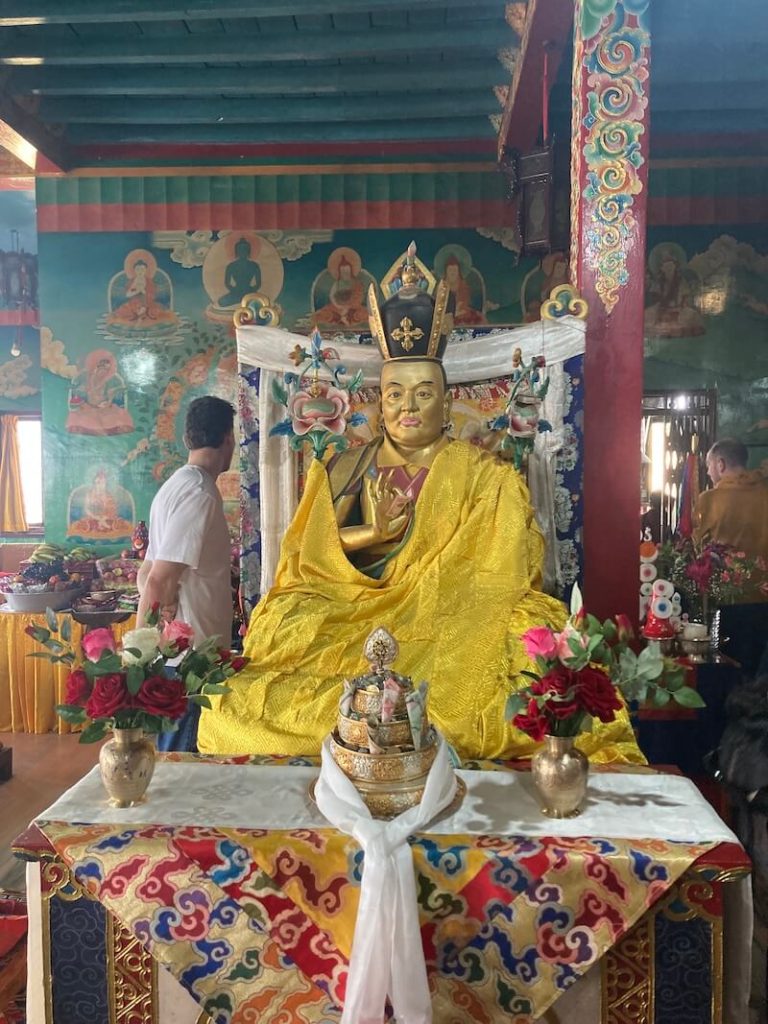
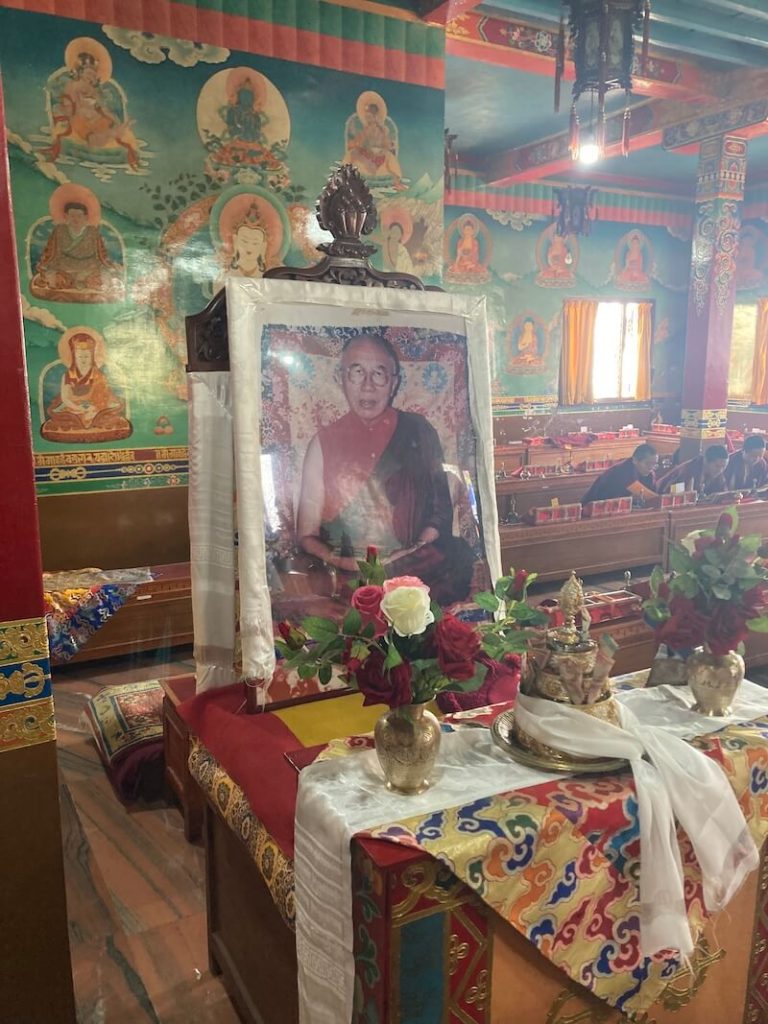
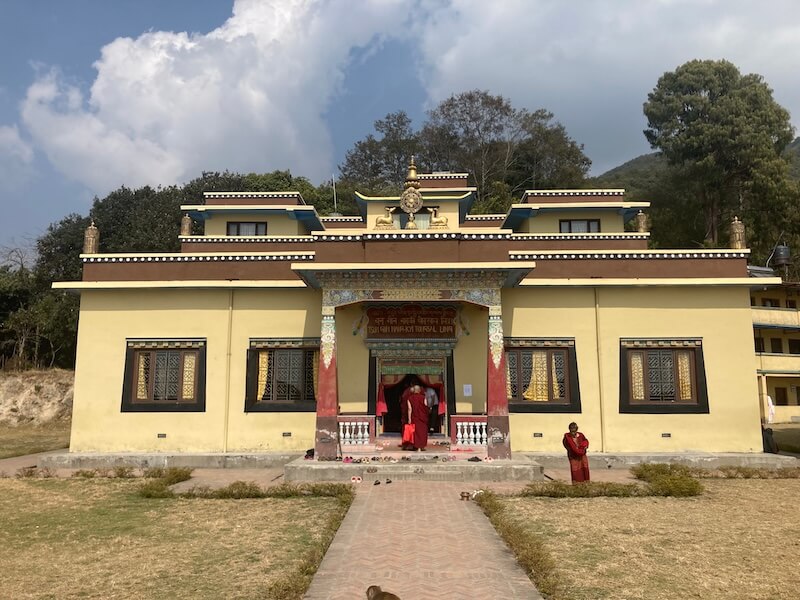
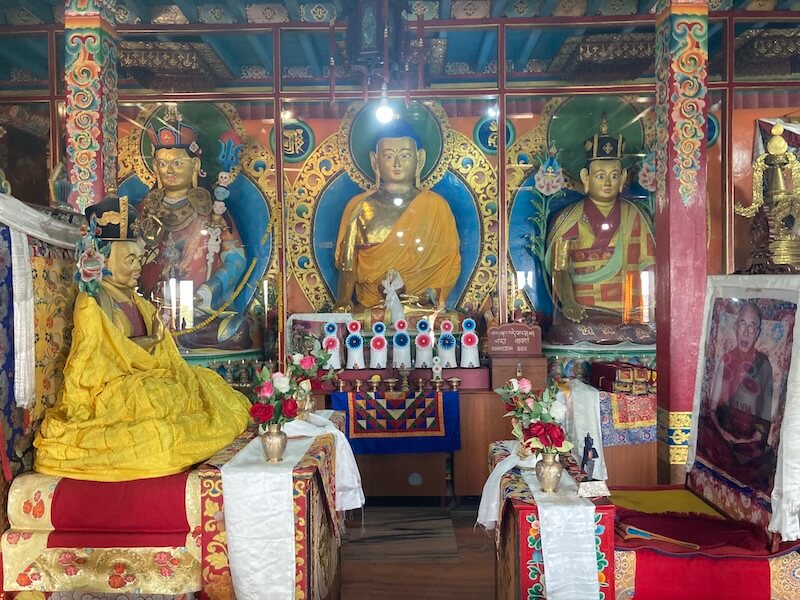
The main temple there was built by Tulku Urgyen Rinpoche. The building has been gradually expanded. In the lhakhang, one will see three big statues of Guru Rinpoche, Buddha Shakyamuni, and the 15th Karmapa. These statues were handcrafted by Tulku Urgyen himself and consecrated by the 16th Karmapa. Karmapa arrived by helicopter and consecrated the statues and the temple. Within the shrine, one will find a statue of Guru Rinpoche holding the vajra next to his chest, which basically symbolises the Chokling Tersar tradition. However, one will also find a smaller statue of Guru Rinpoche with his right hand holding the dorje, stretched down on his right knee, symbolising the Longchen Nyngtik tradition that Garsha Lama Sonam Tenzin practised. Therefore, all statutes belonging to the Longchen Nyingtik tradition were from the original lama of the monastery. However, nowadays, the main activity is the Chokling Tersar tradition.
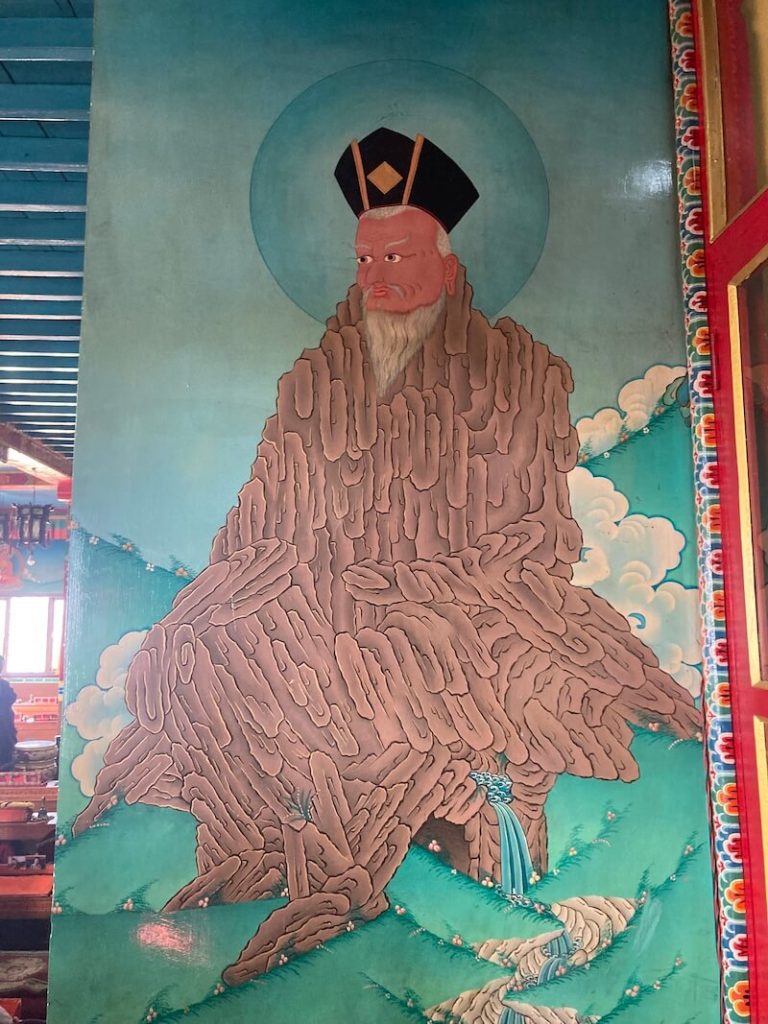
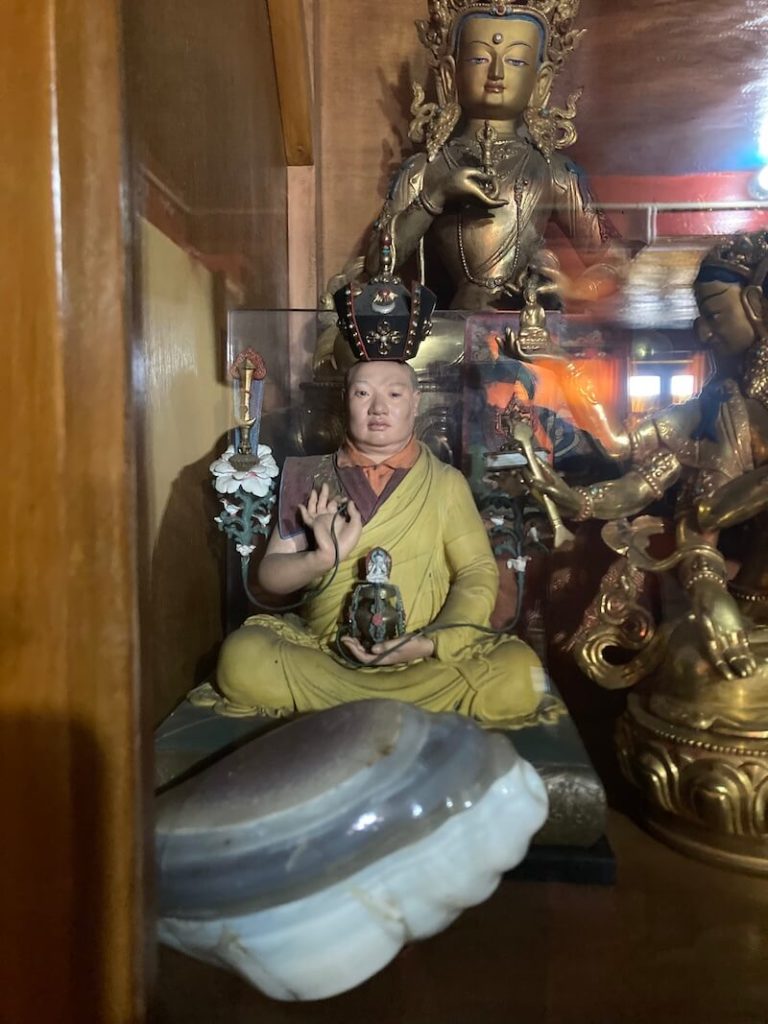
Going into the lhakang, apart from seeing the three main statues at the centre, one will see a statue of the 16th Karmapa on one throne and a picture of Tulku Urgyen Rinpoche on the other throne, facing eachother. Around the walls, there are images of the Buddha, and on the right side, when facing the shrine with the main statues, next to a beautiful statue of Tara, one will find a very interesting image of a Karmapa in what seems like a body of a rock from which a creek of water is flowing down. It is very particular because I have never seen such a version of Karmapa. We learned from a monk there that this image has a story. The story is that some people doubted the Karmapa’s spiritual realisation, so he decided to prove it by turning himself into a mountain. It is indeed a powerful depiction.
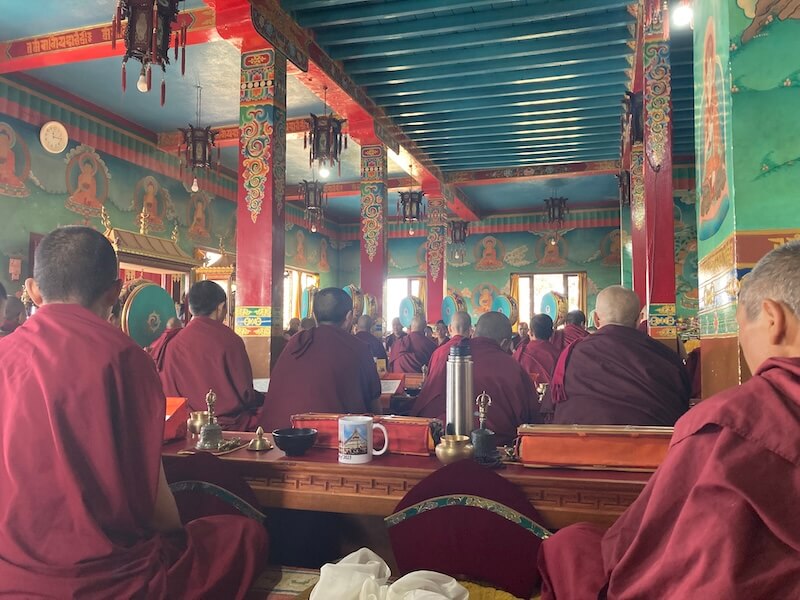
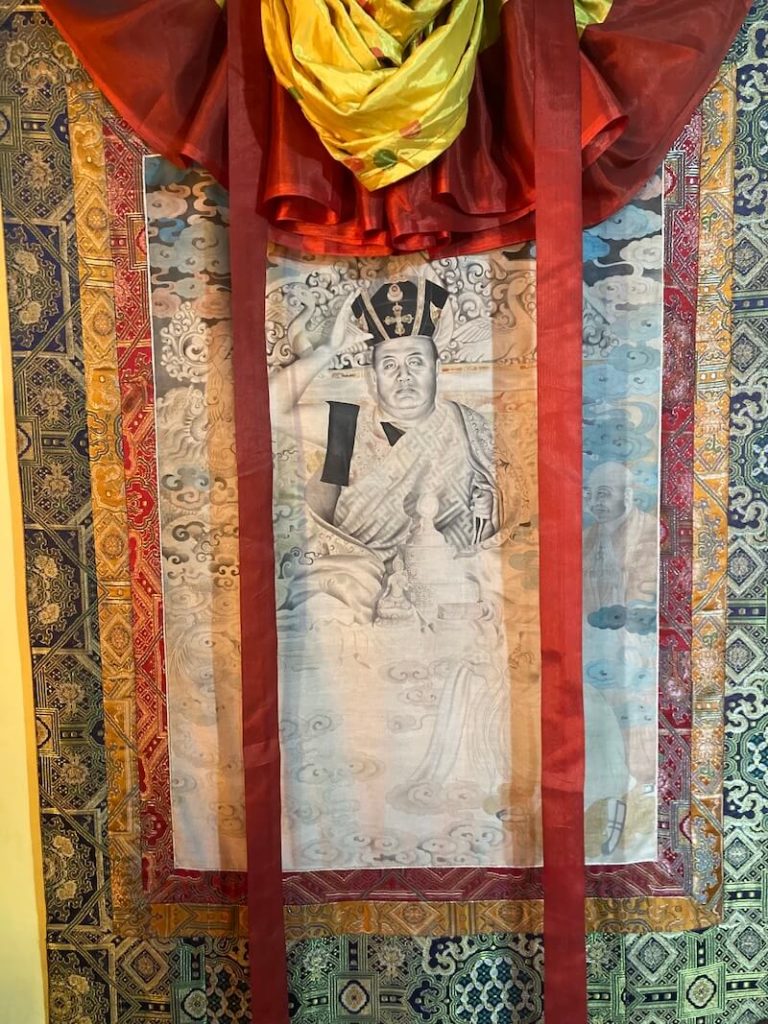
Above and behind the lhakang in the building, one can visit two rooms of Tulku Urgyen Rinpoche. One room is inside the building, and the other one is visible from the courtyard. I strongly recommend visiting both rooms and dedicating some time to practice there.
As for the national park, it did not yet exist when the monastery was built. However, later, once it was established, they moved most residents who had lived within the area of today’s national park. This would also have been the case for the monastery if the nuns had not prevented it. Thanks to them, today Nagi Gompa is enclaved within the Shivapuri National Park. Yet the monastery still needs permission even if it wants to cut a tree. In general, Shivapuri is considered a holy area for Buddhists and Hindus alike. If one goes behind and up from the monastery to the top of the mountain, one can see all the snow-covered mountains in the background. There is also a rock around there associated with the Buddha Kasyapa, and another called Tara Rock.
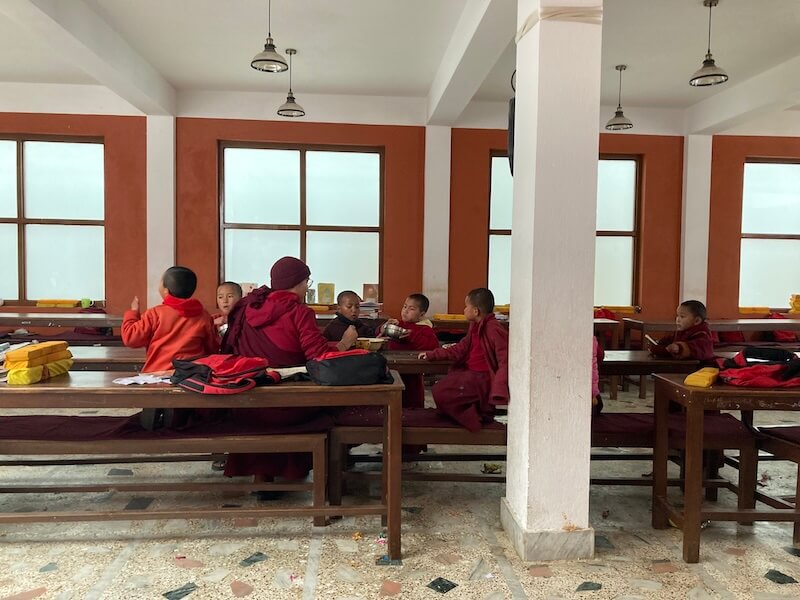
In the monastery, there are currently around 200 nuns. Around 10 years ago, a shedra (a monastic school) was established. So they are setting up a very intensive programme of study, and there have already been two batches of nuns who have graduated from the shedra. Apart from that, a building for doing a three-year retreat has also been built, allowing the nuns to focus intensively on meditation.